

The Competence Trap: How Homeownership Changed the Way I Think About Design
“Designers need to focus their attention on the cases where things go wrong, not just on when things work as planned.”
― Donald A. Norman, The Design of Everyday Things
Competence can seem like having the cheat codes to life, but sometimes it becomes a trap. People can pile on the work knowing that you’ll always find a way to get it done. Unfortunately, you can also start adding to your own burdens until you’re burned out, too many projects are left unfinished, and more of your life is spent on upkeep than on the things that actually move you forward.
Most of my adult life was spent living in apartments and condos. I had plenty of free time, but it wasn’t always enjoyable. That kind of living was simply too busy and too noisy for me. Most of those buildings stood next to major roads, which only added to the clamor. I longed for a quiet property of my own, something I could take care of, something closer to nature, and something where I could shape more of my surroundings to fit my own tastes.
At that time, I was interested in stories about people escaping the city environment for a slower-paced life in the country. Some couldn’t afford a rural home and a large property, so they opted for tiny homes on rented land. Others saved up for years to start a hobby farm. It sounded like a wonderful retreat from a world that seemed to be increasingly at odds with natural rhythms—24/7 stores, traffic, bright lights, and concrete.
Growing up, I was no stranger to hard work. By the time I was 12 years old, the responsibility of taking care of the yard largely fell on my shoulders. It was a very small property in Chicago. It took me less than half an hour to mow the lawn, while weeding the gravel driveway to the alley was a several-hour job when I felt up to the task. It wasn’t all bad. I’d listen to music when I was working and there was always something satisfying about keeping the place in order.
Later in life, when my wife and I bought a 1.7-acre property in a rural area, it was exciting! To think about all that potential! I’d be mowing again, enjoying the fresh air, and the smell of grass! Creating a garden was on the agenda and possibly getting some chickens. I was also starting my stained glass business full-time. I thought I’d have the flexibility to do it all. I couldn’t have been more wrong.
What went wrong? After all, it was only a larger property. Mowing lawns, maintaining equipment, weeding, and other landscaping tasks weren’t exactly outside of my wheelhouse. The capability was there, but it quickly turned into a massive grind. During the warmer months, a third of my week was dedicated to maintenance. Once I went back to mechanical design full-time, my weekends and the time between work and dinner were already spoken for. Maintenance along with the projects I took on to reduce future maintenance, became a series of chronic, unwanted meetings on my calendar.
Here are two examples of maintenance that fell outside of a reasonable scope:
Mowing
This is a scenario that compounds in the worst way. The yard is a bad mix of rocky, hilly terrain, poorly graded, unevenly settled ground, and water erosion. It takes nearly four hours to mow roughly one acre of grass. Tree stumps, boulders, exposed roots, and forest edge account for additional obstacles. Why does it take so long? Because the ground is so bumpy and uneven that I need to overlap my passes by 30 inches with a 48-inch mowing deck! If I don’t, it leaves a trail of unevenly cut grass that makes it look like I was mowing under the influence.
Then, the best part is cleaning up around all the obstacles and other areas that a lawn tractor cannot navigate with a push mower for about another hour. I have yielded some areas back to the wilderness, but when most of your yard is in the front and visible from the road, you can only let so much slide before it looks like the place has been abandoned. Besides, in the country if you neglect a stretch of grass for too long, it will become home to a variety of critters in no time, critters I have no intention of mowing over. I already have to watch out for toads, snakes, and mice as it is.
Landscaping Chaos
I’m no fan of harsh chemicals. I hated using them in stained glass work, which is part of why I stopped adding patina and eventually stopped soldering altogether.I was not interested in spraying weed killer all around the house. Evidence of previous weed killer use around the yard consisted of a ring of bare soil around the landscaping stone, tree stumps, and large boulders, followed by outer rings of sandy soil, weeds, and Bermuda grass where little else would grow.
Since we didn’t follow the previous weed killing regime, each zone of landscaping stone quickly turned into weed patches with a vengeance. After a year of spending several hours at a time weeding those spots, several times a year, I had enough.The entire house was surrounded by this landscaping stone—much of it in places that seemed completely unnecessary. There was no border around the edges either so there was this blurred line of grass mixing in with the stone and vice versa. I started removing the most superfluous sections and replaced them with grass that I could mow in seconds as opposed to the exponential time it took to weed them.
While removing the first batch of stone, I quickly noticed that no one had cleaned the stone before laying it all down. There was a full inch of sand sitting above the landscape fabric and underneath the top layer of stone! Some sediment buildup is inevitable over time, but this was recently installed. No wonder each location became a giant weed factory! Sometimes suppliers deliver several tons of stone with too much sediment mixed in! Free sand you didn’t want is not a great way to start a landscaping project. If you spread that mix out without cleaning the stone first, you’re already on your way to creating your very own expensive, weed nursery. This entire project spanned multiple years and I’ve added my own stone and brick borders where needed.
It just goes to show how a poorly designed system that is overly reliant on constant upkeep causes so much unnecessary frustration. I had heard about systems thinking long before I lived at this house, but this is where I developed a clearer grasp of the concept. Over time, I began to see patterns at work: how water runoff continuously eroded certain areas, how it spread seeds and weeds into my gravel driveway, and how inherited bad landscaping decisions led to countless hours of weeding, mowing, and digging.
I’ve learned from my own mistakes as well. After a patio installation, I had to repair a berm and regrade the area so runoff would flow downhill and away from the house. After repairing most of the berm, a torrential rain revealed that I was missing a crucial trench. While I successfully kept water away from the house, I didn’t adequately account for where the patio runoff should go. I was still operating under old assumptions of how runoff had behaved before the patio existed. I eventually fixed the area and now everything drains away from both the house and the patio. I’m not immune to my own poor design decisions, but at least I learn from them and I make changes.
Could I have hired someone to do the work? Yes, but hiring people could mean opening an entirely different can of worms. Finding reliable, competent help isn’t always easy and it can get expensive fast. I like getting my hands dirty and I like the exercise that comes with manual labor. It beats other forms of exercise that I find to be boring and repetitive. As much as I want to do it, though, I don’t want to have to do it. I’d rather say, “Today’s a nice day for a small project,” than, “Well, I guess I have to cram this into my schedule now.” That is where discernment comes in. Just because you can handle something doesn’t mean you won’t regret the mission creep later. We accept these small doses of pain because they reinforce a sense of accomplishment, but at what cost in the end? If it’s for something that matters, then great. If you’re just spinning your wheels, that’s when you know it’s a trap. It was all another lesson in realizing that competence does not always equate to less work, and that just because you can does not always mean you should. By contrast, our garden was a perfect example of effort that compounds, yielding fresh fruit, vegetables, and perennial plants we can harvest from year to year.
Living in this house has taught me some extremely valuable lessons. I’ve learned new skills out of necessity. I’ve discovered that I’m more capable than I give myself credit for. But I’ve also learned how to spot new patterns and I’ve gained a deep appreciation for the limitations of time. These experiences have highlighted the importance of choosing your battles wisely. Do I really want to spend my time wrestling with maintenance that is beyond the proportions of a balanced life? What is even worth my time? When people choose a place to live, whether they realize it or not, they’re also choosing a lifestyle. They’re adding a certain level of responsibility and commitment to their lives.
I look at all of this as a matter of design. How would you design your life from the ground up? Our families, our careers, and our homes serve as our base. Everything else gets built on top. Whether those pieces support the life you want depends on how you prioritize your time, effort, and energy. Maintenance is necessary, but only to a point. Neglect can cost far more time and money when systems fail. A blocked gutter can damage landscaping, rot eaves, allow water into your walls, or undermine a foundation. But some maintenance is really a question of judgment, scale, and design. Some of it is just another form of clutter, like an expensive hobby that does add any value. That is one reason I will be looking for a different kind of property this year. I am far more cognizant now of what I need versus what I’m capable of handling.
In hindsight, I should have recognized sooner that some of the principles I learned in product design did not end with just products. When I was starting out in the product design field, my mentor, also named George, did not give me all the answers. Instead, he taught me how to conceptualize the overall scope of a design. He showed me how to anticipate unwanted side effects: how stacked tolerances could determine whether parts fit together properly, how someone would actually assemble those parts, how much space would be needed for tool access, and why overcomplicating a design could increase manufacturing time and reduce consistency. Over time, these lessons and experiences have evolved into a form of intuition. What I did not fully appreciate back then was how those same principles of anticipating scenarios of overcomplication could be applied to other areas of life, and how those areas could teach their own lessons as well.
K.I.S.S., “Keep it simple, stupid” is my favorite acronym here. It’s straight to the point and a useful one to remember in a world where complexity is often mistaken for sophistication. As you’ve read, I’ve been guilty of overcomplicating things too. Modern life is a complex animal, but it doesn’t need to be overfed. I’ve been applying these lessons whenever I design a product today. The best forms of speed, efficiency, and user friendliness often stem from simplicity. If the product does not require 87 steps to manufacture, if the design lends itself to quick and easy assembly, and if the end user isn’t endlessly frustrated with it, it’s a win across the board! Life doesn’t have to be designed around an intricate circus act. We could cut out the clown show, stop walking the tightrope, cancel the juggling act, and forget about taming wild animals. Living could be more like a walk in the park.
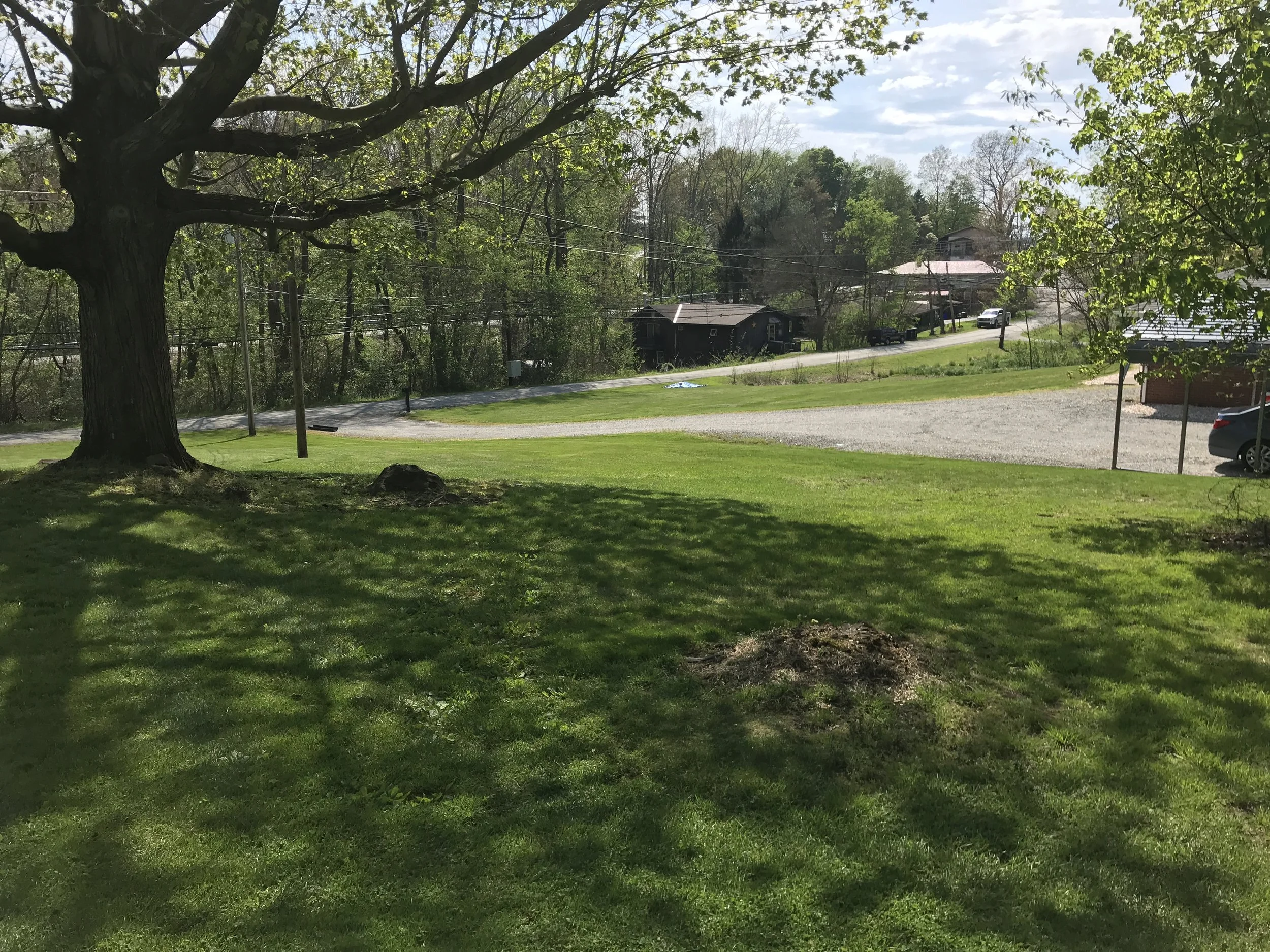
This beautiful, bucolic scene hides a wide variety of recurring demands on time. I’m proud of how well I’ve kept the place up and I’ve appreciated the praise from neighbors, but I need to be more mindful of what I choose to value with my time.
Subscribe on Substack to receive new updates.