


About George Biggs
Background:
I’ve spent over twenty-five years as a mechanical designer, working in CAD and thinking in terms of structure, proportion, and function. That mindset naturally carries into my creative work.
My designs begin on a screen—clean lines, constraints, symmetry—and evolve into physical pieces in glass, layered materials, and modern fabrication methods. I don’t see technical and creative work as separate disciplines. Here, they’re intertwined in the pursuit of thoughtful, well-built design.
Influence:
My earliest memories of light given structure and form were in church—where ordinary sunlight passed through stained glass and emerged deliberate, shaped, and alive with color.
Years later, living among fields and forests in Pennsylvania, I began to see structures at work in nature. What appears wild is rarely without order. A forest edge has rhythm. Branches reach toward light. Roots spread in search of water and nutrients. Growth is shaped both by its own structure and from the environment.
Design should follow the same rule: an object should complement its environment.
Prairie lines, heritage forms, and devotional symbolism endure for a reason. They are disciplined design languages that have stood the test of time.
Philosophy:
We live in a world of disposable design—fast trends and forgettable objects built quickly and cheaply.
I’m more interested in work that's timeless.
I use modern tools and materials, but they’re built on traditional foundations. The goal isn’t nostalgia or trend—it’s permanence. Design that feels grounded, intentional, and at home in its surroundings.

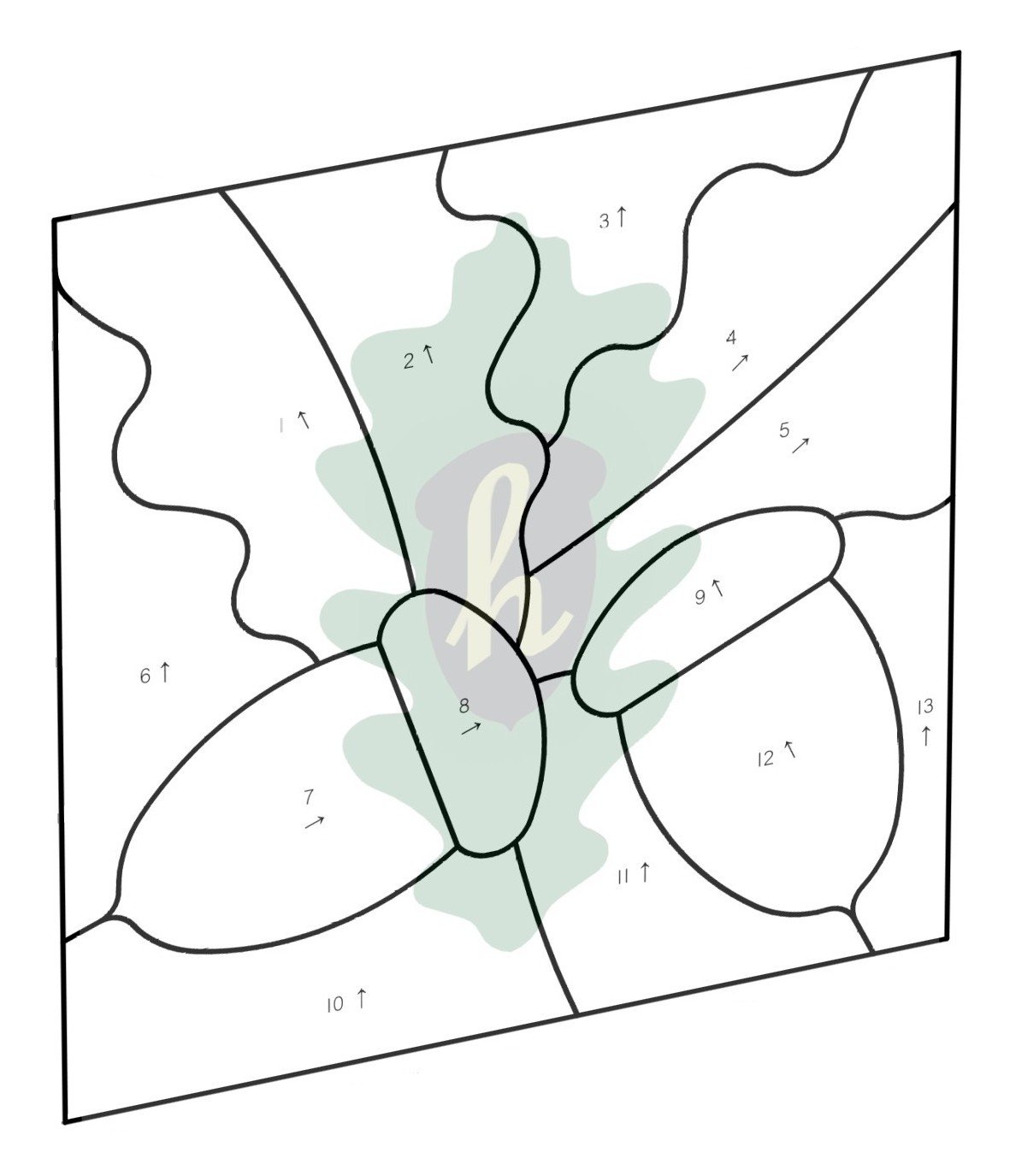
It all starts with a pattern. Geometric balance, joint intersection locations, texture grain alignment, and material constraints are considered from the beginning, ensuring that each design translates cleanly from drawing to glass.