

Inspiration
“Humility is the mother of giants. One sees great things from the valley; only small things from the peak.” ~ G.K. Chesterton
As I grow older, my relationship with the world around me continues to evolve. I find myself drawing from the well of inspiration at greater depths. I can better articulate feelings and impressions from past experiences. As I evolve, so does my work. Lately, I’ve been going through a metamorphosis of sorts in which I’ve been challenging my inner cynic far more often. This cynical tendency could have a way of blunting my appreciation for the wonders of the world around me and leads to goals that feel hollow, even after accomplishing them. When the cynic is at the forefront, it can affect my work—prioritizing what’s popular over what’s personal.
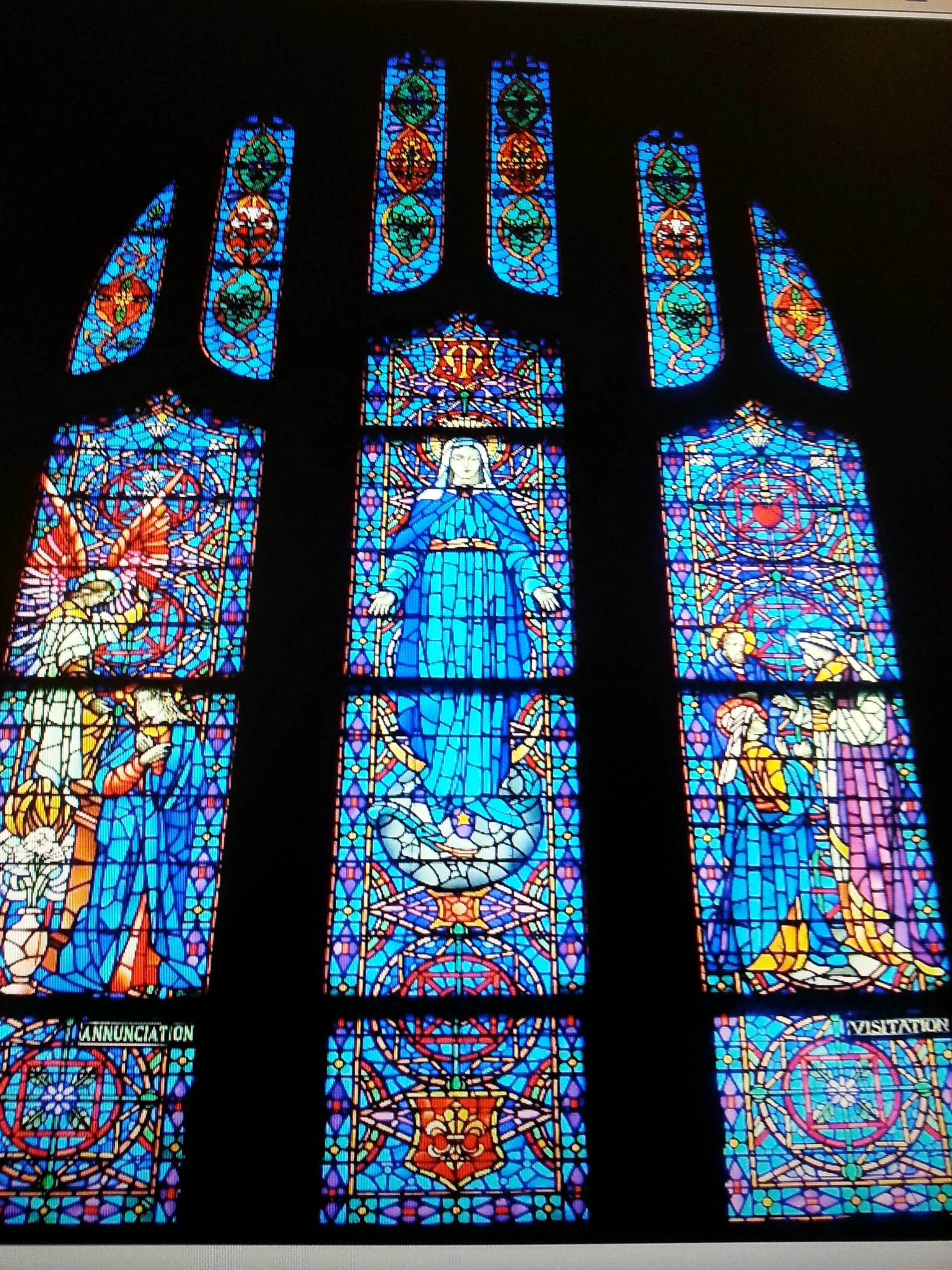
Growing up as a Catholic School student, I was exposed early on to an interesting concept: art paying homage to another creator—in this case, the Creator. All-school masses were held often. So, whenever I stepped into that Gothic Revival style church, I was always in awe. There wasn’t a single instance in which I didn’t find myself taking its large, beautiful stained glass windows for granted. These towering displays were something to behold, especially in full sun when the entire church was bathed in an array of colors!
It was unbelievable to me how this humble South Side of Chicago neighborhood contained such wonders of beauty and craftmanship within those halls. These windows not only depicted events from the Bible with light but exemplified a quiet humility. Unlike pieces displayed in art museums and galleries, we seldom know the authors of these works. The artwork speaks for itself and celebrates a faith rather than the egos of their creators.
Later on, I’d come to learn how stained glass windows were created. We were fortunate to see a demonstration by a Brother from the Congregation of Christian Brothers, who showed us how he fabricated the stained glass windows for our high school chapel. It still seemed like rocket science until I took a class over a decade later. It was a tradition I very much wanted to be a part of.
Nature itself is a common inspiration for many. It’s an intricate web of patterns, redundancies, ecosystems, rhythms, and creatures of varying sizes each with a fundamental role to play. If you’re ever in a frenzy, stop and watch a squirrel quietly gather food, or ducks just going about their business in a pond. They pay no mind to the complexities we tangle ourselves in, they just live in the moment.
Like clockwork, the flowers bloom, plants go to seed, leaves change their colors, and the trees let them fall away. It’s all beautiful to us, yet it’s just every creature being themselves. There’s no ego there. Competition is normal and natural, reserved for survival rather than performance. I often wonder what we could accomplish if we could do the same—focus on what we do best without the baggage, contrived motives, or the need for recognition. Nature’s inspiration isn’t just found in its surface beauty, but in recognizing its order, efficiency, balance, and persistence. Attributes many of us wish to emulate.
While these inspirations spoke to me on many levels, it wasn’t until this time in my life, that I’ve been able to articulate its subtle messages. The significance of longevity is one of those messages. We live in a time in which a large percentage of what is manufactured is disposable, temporary. Artifacts and antique heirlooms are eclipsed by tchotchkes of every kind. Thrift stores are drowning in them as they’re seldom passed down. Perhaps we could bring back a trend of creating items with more staying power.
In previous posts, I’ve mentioned how I’ve struggled with knowing what to create. Given some R&D time, a plan, and the right equipment, I could create whatever comes to mind. In order to pare it down though, I’ve had to take a deep dive into why I’m doing this in the first place. I’ve produced some products that in hindsight were inspired more by cynicism than meaningful muses. I understand now why I haven’t been excited about them. Earning a living is important but living in earnest matters more. Leaving a legacy isn’t about having a name attached to fame, it’s about replenishing the well of inspiration for future generations.
Subscribe on Substack to receive new updates.