
When Old Growth Crowds Future Growth
"He takes away every branch in me that does not bear fruit, and every one that does he prunes so that it bears more fruit." ~ John 15:2
It’s time for an end of the year reflection. I won’t get into some typical New Year’s resolutions that we often struggle with, but a topic much larger in scope—one that spans our entire lives. What is growth? What’s the point? How do we end up stagnating at different moments of adulthood? Could old notions that have served us well in the past stunt future growth? Growth represents an increased capacity for fulfillment. You work to become a fully-actualized human being: dwelling within the flow zone as much as possible, feeling good at best and determined at worst as you struggle at each stage to realize your potential. I say all of this because I sincerely believe we have a purpose, meaning, and a reason for being and that all growth has an actual point to it. It’s not just for our own benefit, but for the benefit of our species and our world to subsequently leave things better than how they were found in our own way. Having a disconnected, bird’s-eye view on a situation can help bring things into perspective, ironically it can bring us back down to earth as we get out of ourselves, our own desires and to just simply attempt to observe everything without our own baggage getting in the way.
During our first stage of life, we can be fussy babies. There are many unknowns, many unsettling episodes, moments of discomfort, things that frighten us, such as sudden, loud noises. There are also many interesting new experiences that could pique our interest, such as a new favorite relative who makes us laugh and feel content, a stuffed animal companion, a family pet who loves us like one of their own, a wide variety of interesting sights sounds, colors, etc. At such a stage, we don’t have the words to articulate how we feel, there aren’t thoughts so much as reactions and feelings to a variety of stimuli. We don’t have years of training and coping mechanisms to serve as a guide for these wonders. When a child grows a bit older and enters the “Why?” phase, the ability to approach things with more of an abstract lens begins to develop.
I personally recall the mid-to-late 1980s and early 1990s as feeling like the longest period of my life. These were formative years of novelty. We now have words, thoughts, and ideas that we begin to employ to explain and reflect on our new experiences. Many experiences beyond that point can become more familiar and less novel as we get older. We often become creatures of habit over time. This video goes more into depth describing this phenomenon (swear word alert). When you’re absorbing more, experiencing more, partaking in many new activities, and each day brings about a fresh brush with feelings previously unfelt. These moments seem to last longer. This is why you remember your first kiss more than your last few. These connections run deeper within your mind. During these years, I had a swing set in the backyard. I would swing on it for hours, often alone just enjoying the moment, pondering about anything and everything. Many years were spent with contemplation, observation, exploration, and imagination keeping me occupied. I often rode my bike around the neighborhood changing my route constantly, exploring new city blocks I hadn’t traversed before until the radius became too large as I wasn’t supposed to go as far out as I would often go, but oh well. I didn’t have one of those childhoods that revolved around a tight schedule of extracurricular activities. This was also before the age of the smartphone which isn’t a particular helpful tool in allowing a child to learn how to create their own fun. Our dalliances with replacing impromptu, carefree exploration with structured routine begins at this stage. We have a rigid schedule of schooling, classes, followed by a homework regimen. Summers off and the occasional field trip brought respite to this otherwise spoken for existence. Our focal points became our academic careers, something I didn’t take very seriously at first, but the fear of homework, term papers, and test deadlines became increasingly a source of dread. We became well-versed in a variety of subjects whether we found them interesting or not. I’m not saying all of this with a negative spin, a certain amount of structure, discipline, and routine is helpful when orienting oneself, splitting tasks into stages, and in synchronizing with life’s rhythms and cycles. The caveat here is that we can become a little too structured and therefore less adaptive.
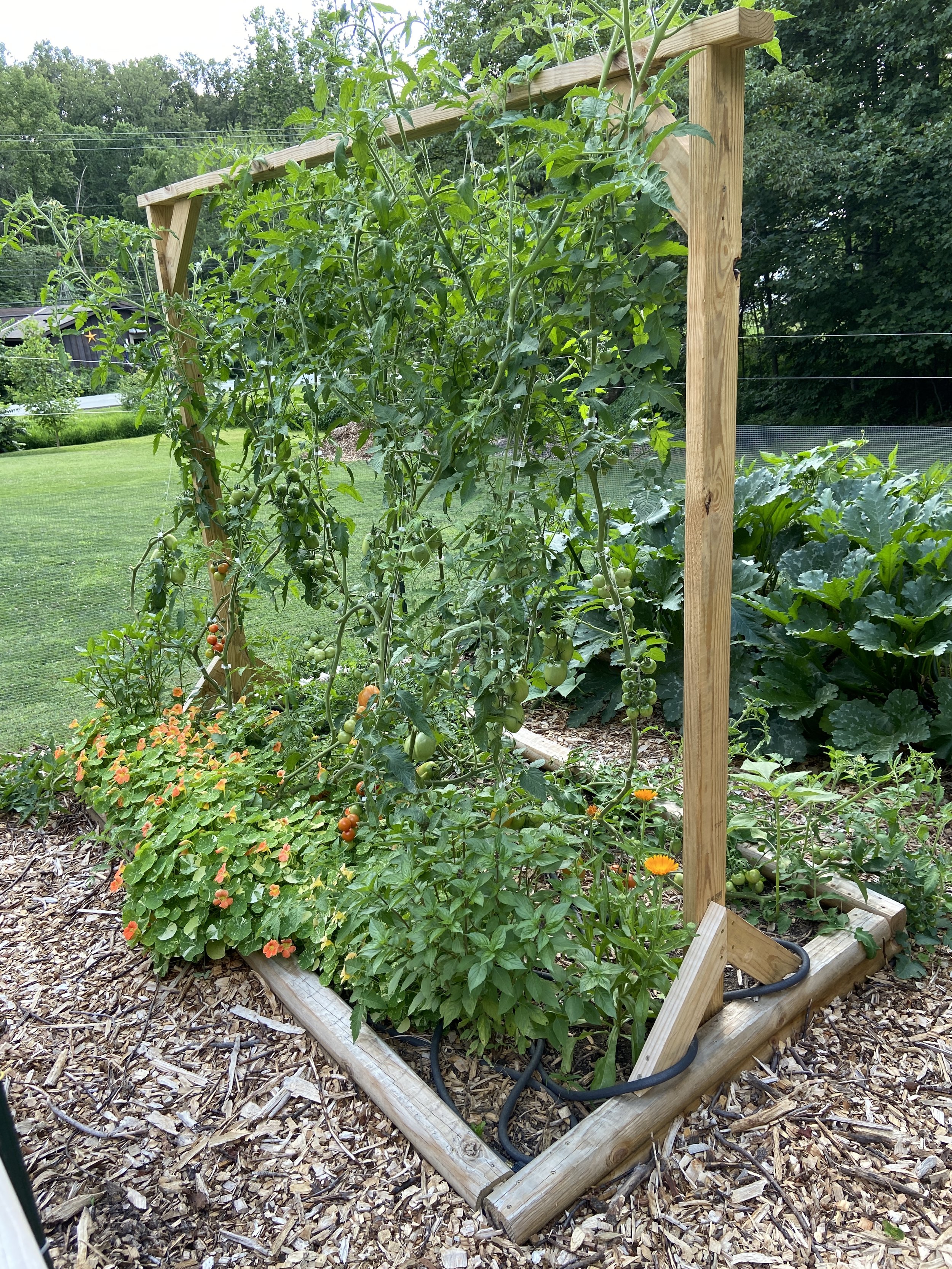
By the time we reach adulthood, we’ve accumulated experience as well as a variety of filters—ways of understanding the world via the lens of impactful moments. Some of them may help or hinder you at varying levels within your life. It can be a necessity to cast off some of them as you grow. Schooling has paved the way for employment. If we’ve been exemplary pupils, chances are, we’ll excel within the realm of gainful employment as well. The dread of missing homework assignments, not grasping the subject material, or failing to achieve an ‘A’ grade evolves into missing project completion deadlines, feeling underqualified, or not getting the performance review you’ve been hoping for, not to mention that raise either. Here, in the corporate world, you will likely not have the entire summer off to discover yourself and working overtime to meet deadlines could put a damper on your hobby or family time. You would have to prioritize your free time more wisely as you may now have a car, home, and children to take care of. Within this framework, satiating one’s curiosities becomes a luxury, especially if your chosen field does not encompass the entire gamut of your interests. The fear of losing your job to failures in your performance or economic matters outside of your control is an unwelcome, but familiar motivator for achievement. Self-employed individuals find themselves in a similar crowd as you must perform to maintain clients’ expectations and the same outside pressures can impact your bottom line for you and your employees. The side effect of these influences can be to adopt a narrowed focus: one of survival and reactionary decision-making over thoughtful, imaginative, and pro-active measures. For the former over-achieving pupil, the success-is-life goal carries over to the professional stage where it can often cause burnout and other more consequential issues such as health implications, familial strife, and feelings of hopelessness. For this analogy, think of your life as a garden. Your career is one plant that grows and yields the fruits of your labor, but in this patch, there are other facets of life, other plants—companion plants such as health, family, and personal interests outside of work that requires care and nurturing. If your other plants are neglected, your entire garden suffers yielding fewer returns. Such is the garden of the career over-achiever.
For me, in the years of 2012-2014, I would notice such a pattern in my own life. I can get very absorbed, competitive, and passionate professionally. I could easily let fear, narrowly-focused determination, and shots of adrenaline serve as my chief motivators. It wasn’t so much a conscious decision, but a coping strategy developed over time for meeting the high demands of a new corporate environment. When you’re young, you may have a chip on your shoulder, you have so much you want to prove, and you want a piece of that American Dream, so you grow into your new role by sacrificing so much to get it all done. You work through ulcers, start feeling guilty when you get sick, you put everything else in your life off just to sit at home recharging from the punishment you’ve put yourself through. This phase represents a certain amount of personal growth and a certain amount of maturity to be able to hunker down as such. It’s important to learn how to work through discomfort, to stay the course, and to plow through tasks that you’d rather avoid. It’s a common, overcompensating approach that many driven young people make in lieu of a lack of overall experience. After all, these traits have allowed me to survive layoff periods, busy seasons, and helped me to navigate through tough projects. But, relying on this approach exclusively and indefinitely comes at a heavy cost.
The need for more balance prompted me to find the time to take up hobbies again (stained glass for one), to exercise more, to walk for a mile or two almost every day to restore novelty to my life and to start intentionally making it revolve less around my job. I would often walk at sunset on clear days. Each day bringing a new watercolor portrait in the sky to behold! I would walk in all kinds of weather, in the rain, in the snow, and I especially enjoyed the Christmas light displays in December! These changes have provided a coping strategy that would keep me engaged within the mechanical design industry for many more years. As time went on, my curiosity for other pursuits increased and I began to start wondering what life would be like to live in other parts of the country and/or to turn my hobbies into a career.
Unfortunately, as I’ve alluded to in my previous post, I still find myself engrossed within this unhealthy version of employee mode despite making these healthier adjustments. When you are your own boss and you just happen to be pretty hard on yourself, the familiar habits of using fear and stress as a motivator leaves one prone to many of the same pitfalls encountered as an employee. When stress leads to success, you begin to assume that this is the only way to attain it. It’s difficult to grow beyond something like this when you have a formula that works as crappy as it is. This immature, martyrdom approach yields diminishing returns as you get older as burnout becomes constant. Not to mention what this does to your physical and mental health. Your relationships suffer at work and at home as chronic irritability can be another side effect. The false notion you get is that the happiness will always come later. “All I need are more successes and then I can rest on my laurels.” That day never comes. It’s never enough. There will always be more work that needs to be done. Why not be happy now? We often look up to the successful, but lately, I’ve begun to ask myself, “How many of these folks are actually happy?” At this point, assigning blame is not important. The responsibility is ours to sort this out.
So, how do we grow out of this misguided mode of motivation? The key word is “discernment.” We should find the time to give ourselves a habit review every so often. Hold a habit kaizen if you will. Not in a nitpicky way. Just simply reflect on your habits, beliefs, motivations and ask yourself, “Which ones are working for me or which ones will yield a healthy, garden of personal growth?” Start trimming the overgrowth, the weeds, prune your trees and remove the branches that choke out new growth. Those branches may have helped things grow at one time, but now they’re just in the way. Reflect on some past successes that were surmounted effortlessly. We all have them. What did it take? Experience? Repetition? It may have taken this self-inflicted, ass-kicking to motivate a young, immature version of me to drive-on-through difficult tasks, but I know I have more wisdom and experience to carry me through today without relying on the inner drill-sergeant. It’s important to remind ourselves, “You got this.” If you can achieve success in the first place, you’re already half-way there. All you have to do is change the formula. Not every task needs the same treatment. Sometimes that weight on your shoulders isn’t responsibility, just baggage. Let it go and let yourself grow.
Subscribe on Substack to receive new updates.